

Precious Metals
Group of metallic elements distinguished by their rarity in nature, distinctive and attractive metallic luster, great economic value, and a series of exceptional physical and chemical properties. They are not abundant in the Earth's crust, which contributes to their high price.
The most well-known and commonly recognized precious metals are: Gold (Au), Silver (Ag), Platinum (Pt) and Palladium (Pd).
Precious metals, especially gold and silver, play a crucial role in the global economy, especially as they constitute a store of value and are used as a hedge against inflation.

Industrial Metals
Industrial metals are a group of metallic elements that are vital to manufacturing, technology, and the infrastructure of modern society. Unlike precious metals, their value is not derived primarily from their rarity or ornamental use, but from their physical and chemical properties, which make them indispensable in a wide range of industrial applications. Their versatility, strength, conductivity, and other characteristics make them essential materials in almost every economic sector. We focus on copper, lithium, and rubidium, three industrial metals with very different but equally crucial roles in today's economy.
Energy Mineral
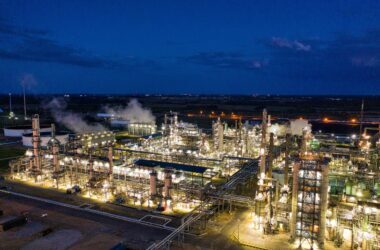
Energy minerals, also known as fossil fuels, are those formed from the decomposition of organic matter over millions of years, under specific conditions of pressure and temperature in the subsurface. These minerals store chemical energy that can be released through processes such as combustion, making them a direct source of energy. They have been the backbone of industrial civilization since the 19th century, powering electricity generation, transportation, and manufacturing. We focus on the main energy minerals: oil, natural gas, and coal. All of these are nonrenewable resources.